
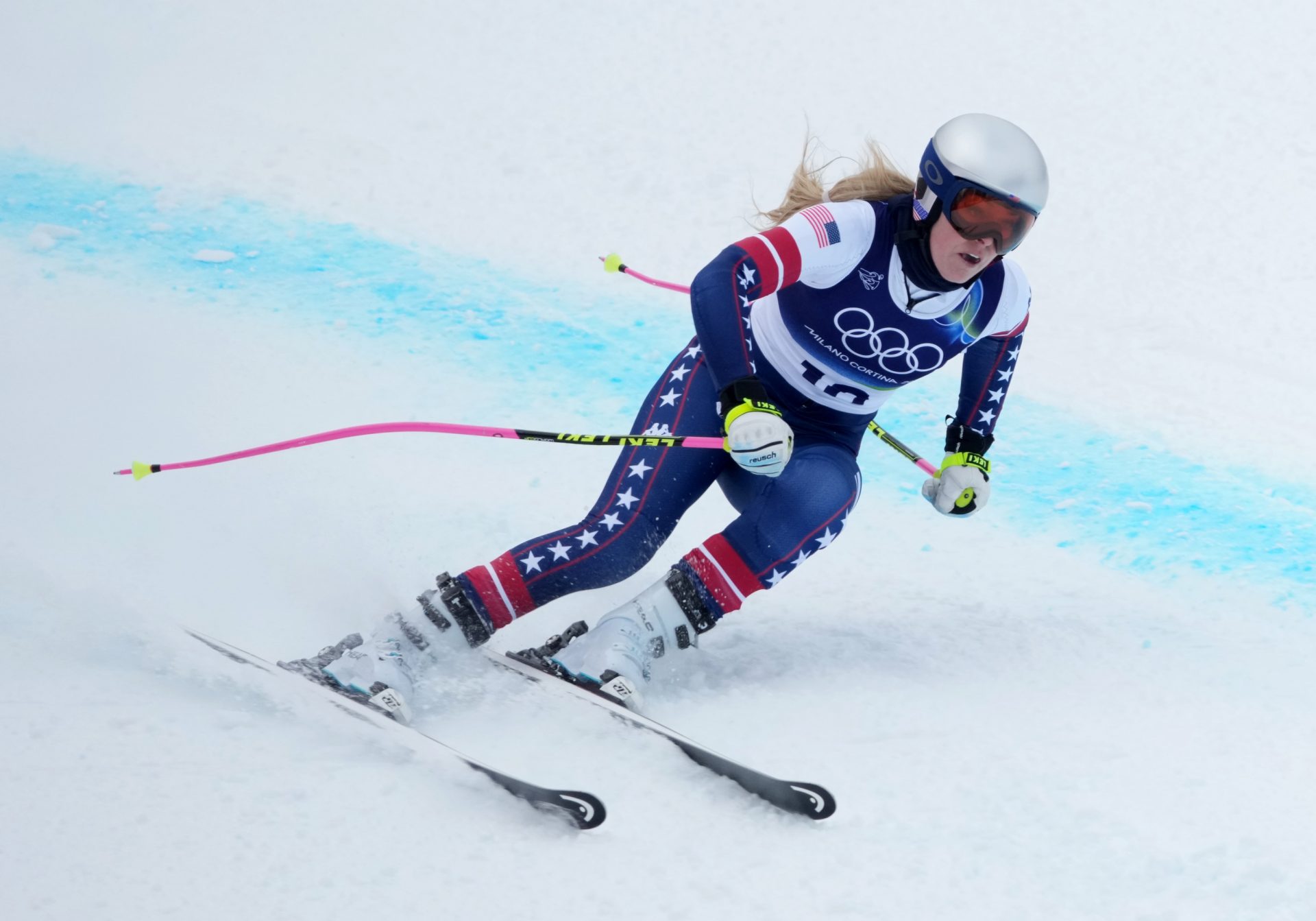
To casual viewers, giant slalom and slalom can look like variations of the same event, which is skiers racing down a snowy mountain while weaving through gates at incredible speed. But within alpine skiing, the two disciplines represent entirely different tests of skill, strategy, and mindset.
One rewards flowing rhythm and powerful carving; the other demands lightning-fast reflexes and relentless precision. The differences become even more evident at the Winter Olympics, where athletes must rapidly shift techniques between events while handling immense pressure and changing snow conditions.
At the 2026 Winter Games in Cortina d’Ampezzo, these contrasts are on full display as racers move from the sweeping turns of giant slalom to the tight, high-intensity challenge of slalom. Understanding how these races differ helps explain why some athletes thrive in one discipline and struggle in another. Along with this, it also helps in explaining why transitioning between them within days can make or break an Olympic campaign.
Giant Slalom vs. Slalom: Course Layout at the Winter Olympics 2026
Slalom
Slalom is the most technical event in alpine skiing. Courses are shorter and packed with closely spaced gates, forcing skiers into constant direction changes and rapid rhythm adjustments. The women’s vertical drop typically ranges from 140 to 220 meters. The gates are tightly spaced, often just a few meters apart, making quick reflexes essential. Athletes frequently hit gates with their hands and shins, which is why protective gear is common.
Giant Slalom
Giant slalom offers more space between gates and longer, sweeping turns. Skiers carve powerful arcs while maintaining momentum through variable terrain. Women’s vertical drop ranges from 300 to 400 meters, which is almost double that of slalom. Gates are wider apart, allowing smoother transitions but demanding stronger edge control and line selection.
It is often described as the balance between technical precision and speed, sitting midway between slalom and faster events like Super-G.
Giant Slalom vs. Slalom – Speed at the Winter Olympics 2026
Slalom
Because of its tighter turns, slalom generally features lower top speeds. It is usually around 25 mph (40km/h). However, it has far more rapid movements and split-second corrections.
Giant Slalom
Giant slalom, meanwhile, allows higher speeds, often exceeding 50 mph (80kph) thanks to wider turns and more open terrain. The rhythm is smoother, and skiers must carry speed efficiently through longer arcs without losing control.
Giant Slalom vs. Slalom – Technical Rules at the Winter Olympics 2026
Both the disciplines follow similar Olympic race formats. In both the races:
- Two runs on separate courses are set by different coaches and are executed on the same day
- Combined times determine the final ranking
- Missing a gate without properly re-entering results in disqualification
- The top 30 racers start in reverse order
- Only the top 30 from the first run qualify for the second run.
However, the way athletes approach each run differs significantly. Slalom skiers often take aggressive risks to gain hundredths of a second, while GS racers focus on maintaining rhythm over a longer course.
Mikaela Shiffrin’s Slalom Preview for the 2026 Winter Olympics
After a difficult giant slalom outing on February 15, attention now shifts to Mikaela Shiffrin and her final event of the 2026 Olympics, which is the women’s slalom scheduled for February 18.
Slalom has long been considered the American’s signature discipline and the event where she built much of her legacy, including earlier Olympic success. The tighter course format highlights her strengths, including the rapid edge changes, technical discipline, and the ability to maintain rhythm under pressure.
The race carries extra significance given the emotional weight of her Olympic campaign so far. With the Games nearing their conclusion, the slalom offers one final opportunity to deliver a defining performance on the sport’s biggest stage.
Read More Tennis News:
1. Mikaela Shiffrin: Everything You Need to Know About Conquering Beijing Anxiety and PTSD Before Today’s Giant Slalom Event
College Sports Network has you covered with the latest news, analysis, insights, and trending stories in tennis, college football, men’s college basketball, women’s college basketball, and college baseball!
