
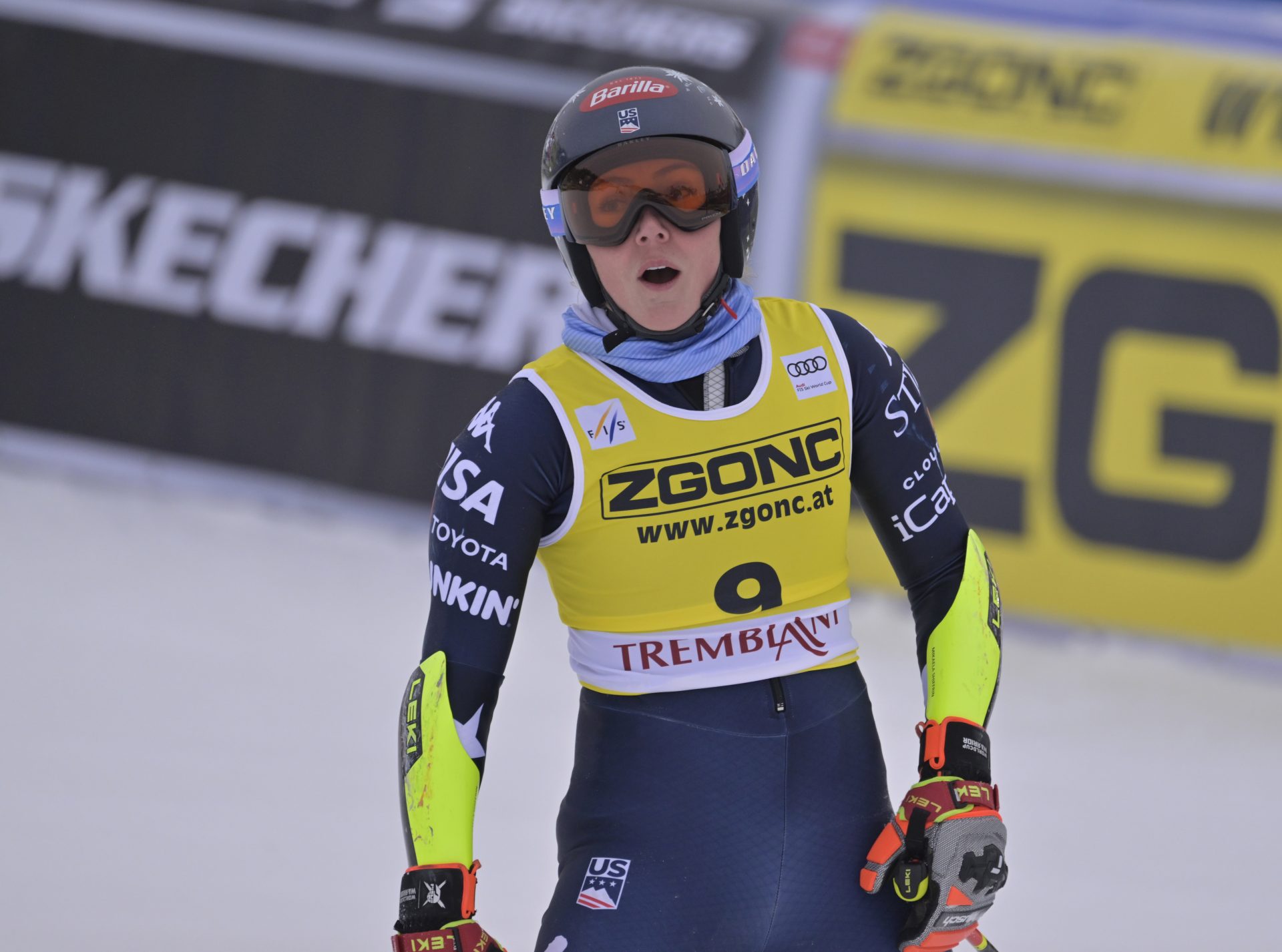
For years, Mikaela Shiffrin has represented precision and dominance in alpine skiing. Yet the story leading into today’s giant slalom is no longer just about records or medals. It is about survival, grief, mental recovery, and redefining success under Olympic pressure.
The Colorado native’s journey from the disappointment of the Beijing 2022 Winter Olympics to the emotional challenges of the 2026 Winter Olympics reveals an athlete who has confronted anxiety, trauma, and vulnerability in ways rarely seen at this level of sport.
Instead of presenting herself as invincible, Shiffrin has openly described how grief, psychological strain, and fear altered both her career and her relationship with skiing. Her current Olympic campaign in Cortina d’Ampezzo arrives not as a straightforward return to dominance, but as the last step in a complex emotional journey, one that began long before the starting gate opened in Italy.
Let’s navigate through all the adversities Shiffrin endured to reach the Giant Slalom race of the 2026 Winter Olympics, which is scheduled to take place on February 15.
What happened with Mikaela Shiffrin at the 2022 Beijing Olympics, and how did she overcome the anxiety?
At the Beijing Games, Shiffrin entered as a heavy favorite in several events, widely expected to add multiple medals to her resume. Instead, the Olympics became one of the most difficult experiences of her career.
The 30-year-old recorded early exits in key technical races, including giant slalom and slalom, and left Beijing without an individual medal. She later described this outcome as emotionally painful and confusing. She said that the experience forced deep reflection and became a catalyst for personal growth rather than simply a sporting failure.
Behind the results was a heavier backdrop. Shiffrin was still processing grief after the sudden death of her father, Jeff Shiffrin, in 2020. This loss deeply affected her and her family and also impacted her motivation and emotional balance. Her mother described Shiffrin’s situation at that time in a recent documentary.
“It was a week she couldn’t even get out of bed. She couldn’t eat. She couldn’t drink anything and lost a lot of weight. I didn’t think Mikaela would ever ski again. I don’t think she thought she would either.”
This grief would resurface at unexpected moments, like when she would handle the death anniversary of her father but then would break down after a great training session.
The Beijing experience ultimately pushed her toward working with a psychologist, helping her understand that emotional recovery was just as important as physical preparation. In one of the episodes of her podcast, she said:
“Beijing Olympics was a catalyst for indescribable growth. To this day, I’m still trying to understand certain pieces of Beijing entirely outside of results and performance, and I’ve learned so much about myself in that process,” said Mikaela Shiffrin.
All about Mikaela Shiffrin’s PTSD recovery journey
If Beijing challenged her psychologically, a frightening crash in November 2024 transformed the struggle into something more clinical. During a World Cup giant slalom in Killington, Shiffrin suffered a severe abdominal puncture injury after hitting a gate at high speed. The physical recovery took months, but the deeper impact was mental.
The American Alpine skier later described symptoms similar to post-traumatic stress, including hesitation, fear, and an inability to attack turns with her usual aggression. In a conversation with the Associated Press, she said:
“I’m mentally blocked in being able to get to the next level of pace and speed and putting power into the turns. And that kind of mental, psychological, PTSD-esque struggle is more than I anticipated. I figured once we touched ground in Europe and we got a chance to get some repetitive training days, I would be able to improve step by step, and sort of the passion and the longing for racing was going to outweigh any fear that I had,” said Mikaela Shiffrin.
She revealed that even when her body healed, her mind continued replaying the crash, particularly in giant slalom, where speed and edge pressure are higher. However, to get over the situation, Mikaela Shiffrin leaned towards therapy and continuous training to gain her confidence back.
Following this crash, she made a comeback by winning her 100th World Cup win in the Giant Slalom race at PyeongChang. This significantly helped in her healing process and was a turning point for her.
Mikaela Shiffrin’s schedule at the 2026 Winter Olympics
After enduring her fair share of adversities, Mikaela Shiffrin has now stepped into the fourth Olympic Games of her career. After competing in the team’s event, she is now all set to showcase her dominance in the Grand Slalom race. Here is the schedule:
Alpine skiing – Women’s Giant Slalom race
Date – February 15
Time – Run 1 – 10:00 am (CET)
Run 2 – 13:30 (CET)
Read More:
College Sports Network has you covered with the latest news, analysis, insights, and trending stories in tennis, college football, men’s college basketball, women’s college basketball, and college baseball!
