
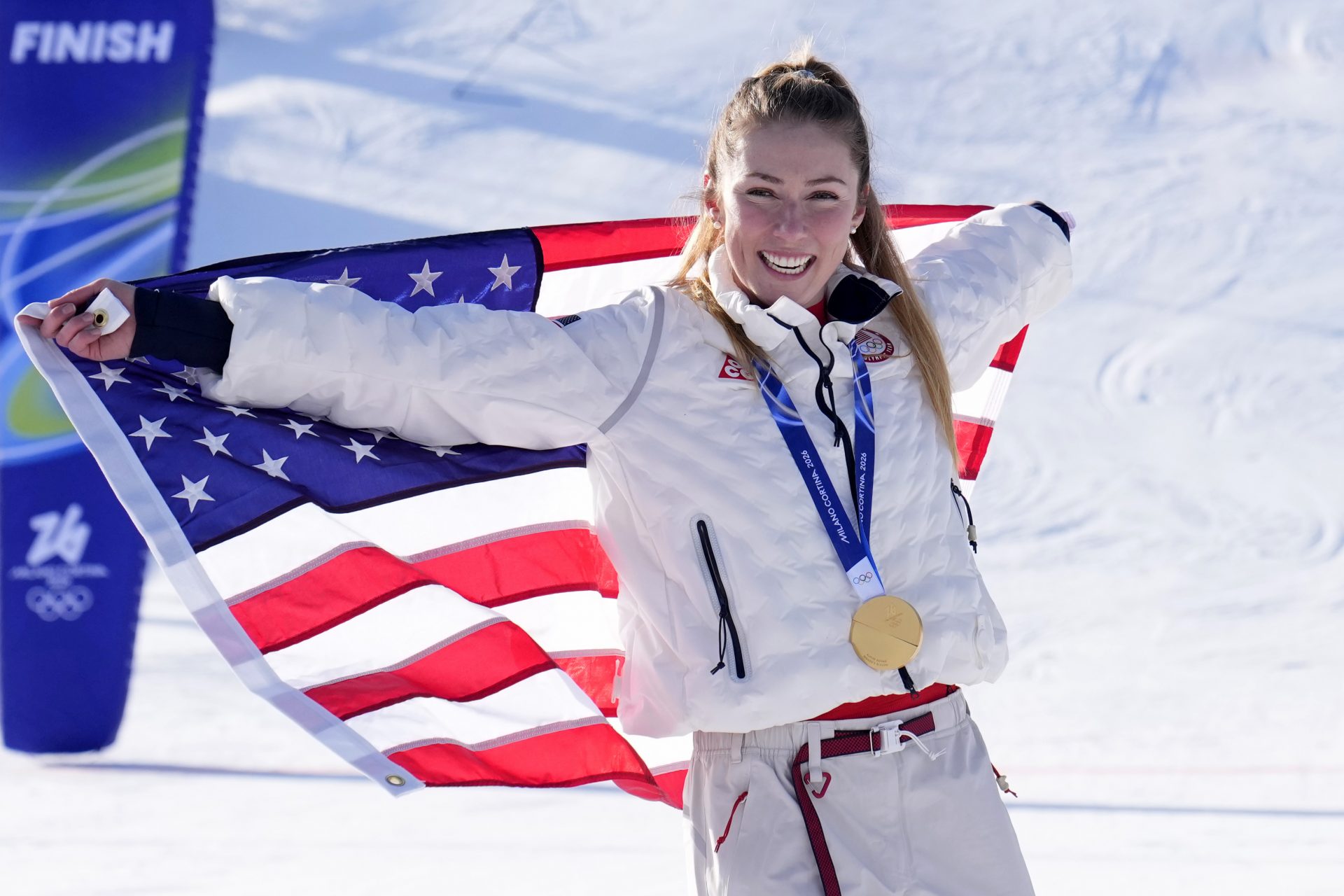
Mikaela Shiffrin recently pushed back on the stereotypical storyline of redeeming herself or ending her medal drought at the 2026 Winter Games. This came after she won her first Olympic gold medal after eight years in Milan.
Shiffrin had a rocky start in Milan as she competed in the combined team event and the Grand Slalom event, where she fell short of a podium finish. Her final event of the Winter Olympics was the slalom event, where she once again solidified her legacy by claiming the gold medal.
She posted a winning time of 1:39.10 after two runs, and this was her first gold medal win since the 2018 Winter Games. Shiffrin and her win were celebrated by the entire sports community as her redemption and her comeback after eight years; however, this is not what the American believes.
In a recent conversation with Sports Illustrated, the 30-year-old rejected the redemption and the eight-year medal drought narrative, saying: (0:34 onwards)
“If we’re talking about life growth and things that were a catalyst for me to be, you know, be a better version of myself, I think Beijing was probably one of the most important time periods of my life. You know, now I can walk away from this Olympics and to have a gold medal, to have another gold medal. And after all of this time that the world, or the storyline out there, is that I got my revenge. I came back. There was a medal drought, and it’s just too simple for what has really happened in the last 8 years, the last 12 years.”
Mikaela Shiffrin has won a total of four Olympic medals in her career, including three golds and one silver.
What Did Mikaela Shiffrin Do Between the Gaps of Her Two Races in the Slalom Final at Milano-Cortina?
Mikaela Shiffrin and the skiers have to undergo two runs, and the combined time decides the winning position in the slalom finals. In the first run on February 18, the American clocked an impressive time of 47.13 seconds to finish at the top, and on the same day in the second run, she maintained her dominance, registering a combined time of 1:39.10 to win the race.
Between these two runs, there is a gap, and as the leader, Shiffrin went in last during the second run. In the aforementioned interview, the skier opened up about the challenges of waiting between the runs and revealed what she did during that time.
“I found it really challenging to manage my energy and to manage the focus. And I had about 30 minutes where I laid it on the ground of the like hospitality. And my mind was kind of racing. But after some time, I had my music in, and I was just like, I don’t know, imagining different things, and at some point during these 30 minutes, a little bit stopped thinking about the race,” said Mikaela Shiffrin (1:24 onwards).
She added:
“I started to actually think about my family and support and my dad, and just to sort of think about the people I care about so much. Not all of them can be here, and like to send a note to them in my mind, like thank you for everything you’ve done. This was all before the second run. So, I was in this mindset of like showing gratitude, which was really special. It was also very emotional. And then I was like, you shouldn’t be crying right now. The race isn’t over. You know, so that’s what the waiting does. Waiting is tough.”
Mikaela Shiffrin will next compete in the women’s super-G in Soldeu, Andorra, on February 28 and March 1.
Read More News:
1. Alysa Liu’s Best Friend Offers Rare Look at Her Return After a Landmark Olympic Performance
3. Big Ten Indoor Track & Field Championships 2026: Schedule, How to Watch and Live Stream Details
College Sports Network has you covered with the latest news, analysis, insights, and trending stories in tennis, college football, men’s college basketball, women’s college basketball, and college baseball!
