
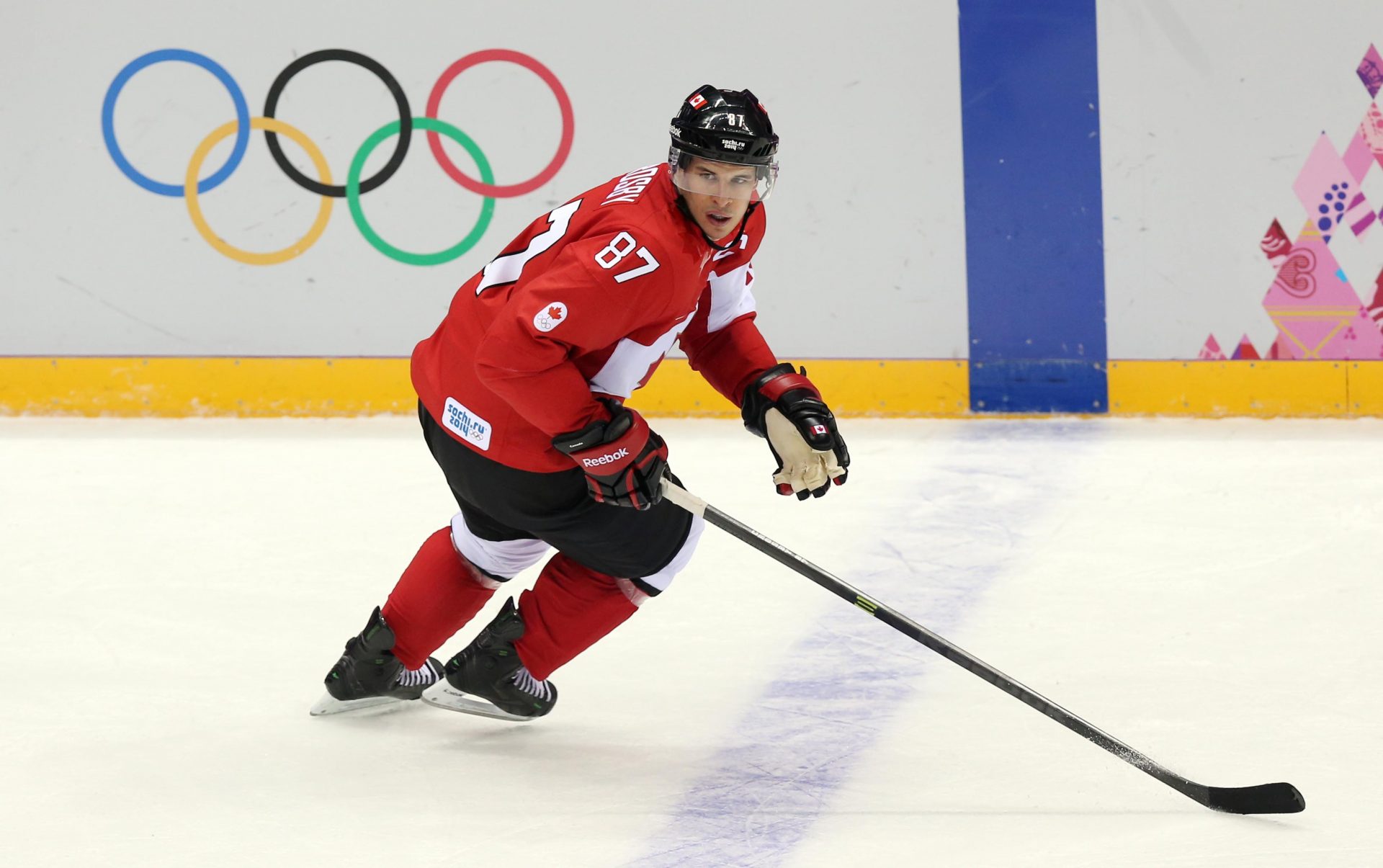
NHL players will get Olympic ice hockey action for the first time since the 2014 Sochi Games. The sport has been a regular feature at each of the Winter Olympics since the inaugural 1924 Games. It even featured during the 1920 Summer Olympic Games held in Antwerp, Belgium.
Olympics Ice Hockey Rules
General goalscoring and penalty rules remain the same as the NHL. Like the 4-Nations Face Off tournament, organized last year, the Olympic Games will have a similar points scoring system. Teams will get three points for a regulation-time win, two points for an overtime or shootout win, one point for an overtime or shootout defeat and no points for a regulation-time defeat.
The men’s teams have named 25 players, while the women’s teams have 23 players on their rosters.
Olympics Ice Hockey Format
The men’s tournament is set to be contested by twelve teams divided among three groups for the preliminary round, which will be used as a stage to determine each team’s playoff seeding. The top three teams in each group and one runner-up with the maximum points from the group stage will receive a bye into the quarterfinals.
The rest of the eight teams’ seeding will then be done based on the following criteria: position in the group, total points, better goal difference, most goals scored and IIHF ranking. These eight teams will face off in a playoff round, with four winners advancing to play the quarter-finals.
For the women’s tournament, there will be two groups consisting of five teams each. However, the top five teams according to IIHF rankings are placed in Group A, with all five moving to the quarters and will be joined by only the top three teams from Group B.
Olympics Ice Hockey Main Differences
The biggest difference will be the size of the rink. Despite an earlier agreement between the NHL and IIHF to make the rink size according to the former’s standards, the organizers made a 196.85 feet-long and 85.3 feet-wide rink. In comparison, NHL rinks have the same width but are 200 feet long. Earlier Olympic tournaments, barring the 2010 and 2022 Games, and other IIHF events have a 197 feet long by 98.5 feet-wide rinks.
The intermissions will also be shorter with Olympic play offering faster action. Players will get 15 minutes of rest in between periods, compared to the NHL, where intermissions last for 18 minutes.
Overtime rules remain the same as the NHL for the preliminary round, with 3-on-3 play for five minutes followed by a five-person shootout, if scores remain level. For the quarterfinals and semifinals, the five minutes will be increased to ten minutes. For the medal games, a traditional 5-on-5 20-minute period will be played out. The play continues until a golden goal is scored.
Players cannot engage in or provoke fights during Olympic play. IIHF referees have the authority to heavily penalize such a player, with players getting a five-minute penalty in previous editions as opposed to the two-minute penalty in the NHL. It could also lead them to their ejection from the game entirely, depending on the fight.
Unlike the NHL, goaltenders aren’t bound by the trapezoid behind their goal to play the puck. They are free to roam around anywhere behind the goal.
