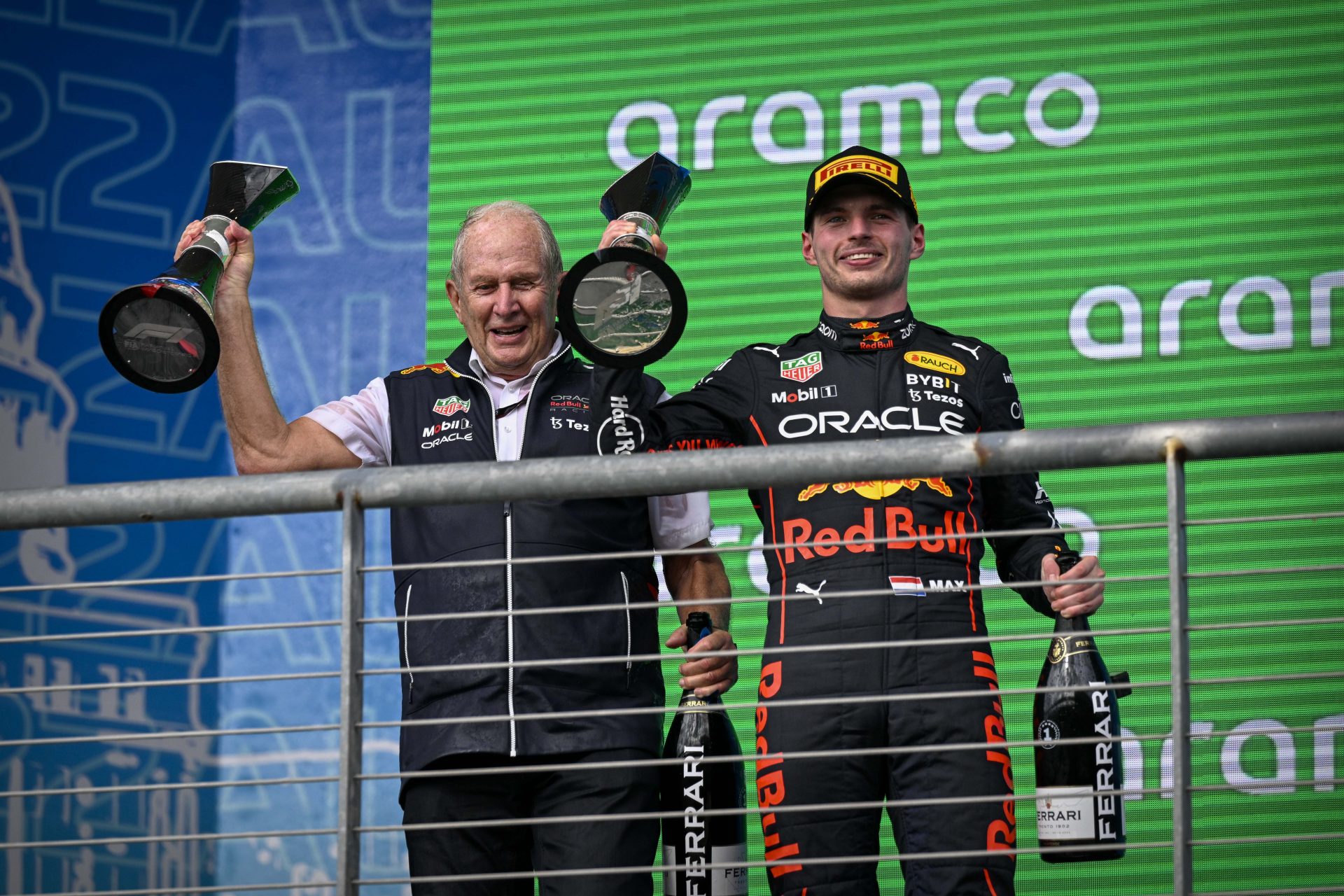
Helmut Marko’s long and often polarizing tenure at Red Bull came to an end in 2025. It closes a chapter that shaped the team’s driver program, internal culture, and competitive direction for more than two decades, as the outfit now prepares for a major reset ahead of the 2026 regulation cycle.
For over 20 years, Marko held control of Red Bull’s talent pipeline across both the senior team and its junior operation. His methods were demanding and frequently unforgiving. Young drivers were promoted aggressively and replaced just as fast if results did not match expectations. That approach drew criticism, as the second Red Bull seat rotated through nine drivers in the past decade.
Yet the same structure has also produced some of the most successful careers in the modern era, including those of Sebastian Vettel, Daniel Ricciardo, Carlos Sainz, and, most significantly, Max Verstappen. Helmut Marko fast-tracked the Dutchman from F3 straight into F1 in 2015. That decision reshaped the sport and delivered Red Bull a four-time world champion who went on to anchor its most dominant era.
It is this side of Marko’s record that former Red Bull junior Pepe Marti has chosen to emphasize, despite his own departure from the program last year.
“He dares to take risks. Risks are always controversial, but sometimes they actually work. In his case, with Max Verstappen, he has raised or developed one of the best drivers in Formula 1 history,” Marti said in an interview with RN365. “So yes, I think he’s done a fantastic job in his role. Of course, he’s known as a strict boss, but personally, he’s been very kind to me. And again, I wish him all the best in his retirement.”
Marti left the Red Bull system after failing to secure a path to a Racing Bulls seat, with the opportunity ultimately going to Arvid Lindblad. The recent exit of Irish prospect Alex Dunne, after Helmut Marko’s unilateral decision to sign him, has again highlighted how fragile those pathways are. Yet Marti insists there is no bitterness.
“I’ve always had a very good relationship with Helmut, back when I was part of Red Bull’s talent program,” he added. “Ultimately, I didn’t perform at the level Red Bull expected of me, and they chose another driver for their Formula 1 team… Helmut has always been incredibly supportive; he really wanted me to have a good career. When I told him I was going to Formula E, he said, ‘I wish you all the best.’ So no, I have nothing against him at all.”
Helmut Marko helped guide Vettel to four consecutive titles, stood behind Sergio Perez during Red Bull’s championship years, and protected Max Verstappen through internal power struggles that followed the death of Dietrich Mateschitz. His exit now leaves Red Bull entering 2026 without the figure who had overseen its sporting decisions since the team’s birth.
Juan Pablo Montoya explains why Helmut Marko’s methods still delivered champions
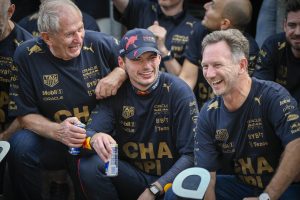
Juan Pablo Montoya has also defended Helmut Marko’s legacy. The former F1 driver has emphasized that while his approach was often extreme, it was grounded in the conviction that he was pushing drivers toward success. He recalled being sent to a ‘psychologist’ at Marko’s insistence and said:
“He has his way of doing things, and people like it, people hate it, people talk. But within his madness, he’s brought in some very good drivers, he’s brought in world champions,” Montoya said on the Cracks Podcast.
“He’s won nine world championships managing drivers. So find me another advisor like that who’s brought in nine drivers, nine times and won world championships as a team.”
Montoya added that the same pattern would likely apply to Max Verstappen in the future.
“I bet you that if Max were to retire and talk about Helmut, he’d say the same crazy things, that Helmut is completely crazy. But at the same time, he respects him because he gave him the opportunity and everything. Just like me.”
Helmut Marko leaves behind a record of six Constructors’ Championships and eight Drivers’ titles, built through a development system that was feared as much as it was admired. Now, Red Bull transitions into a new era under Laurent Mekies, with a restructured management group and its first in-house power unit developed with Ford for 2026.
