
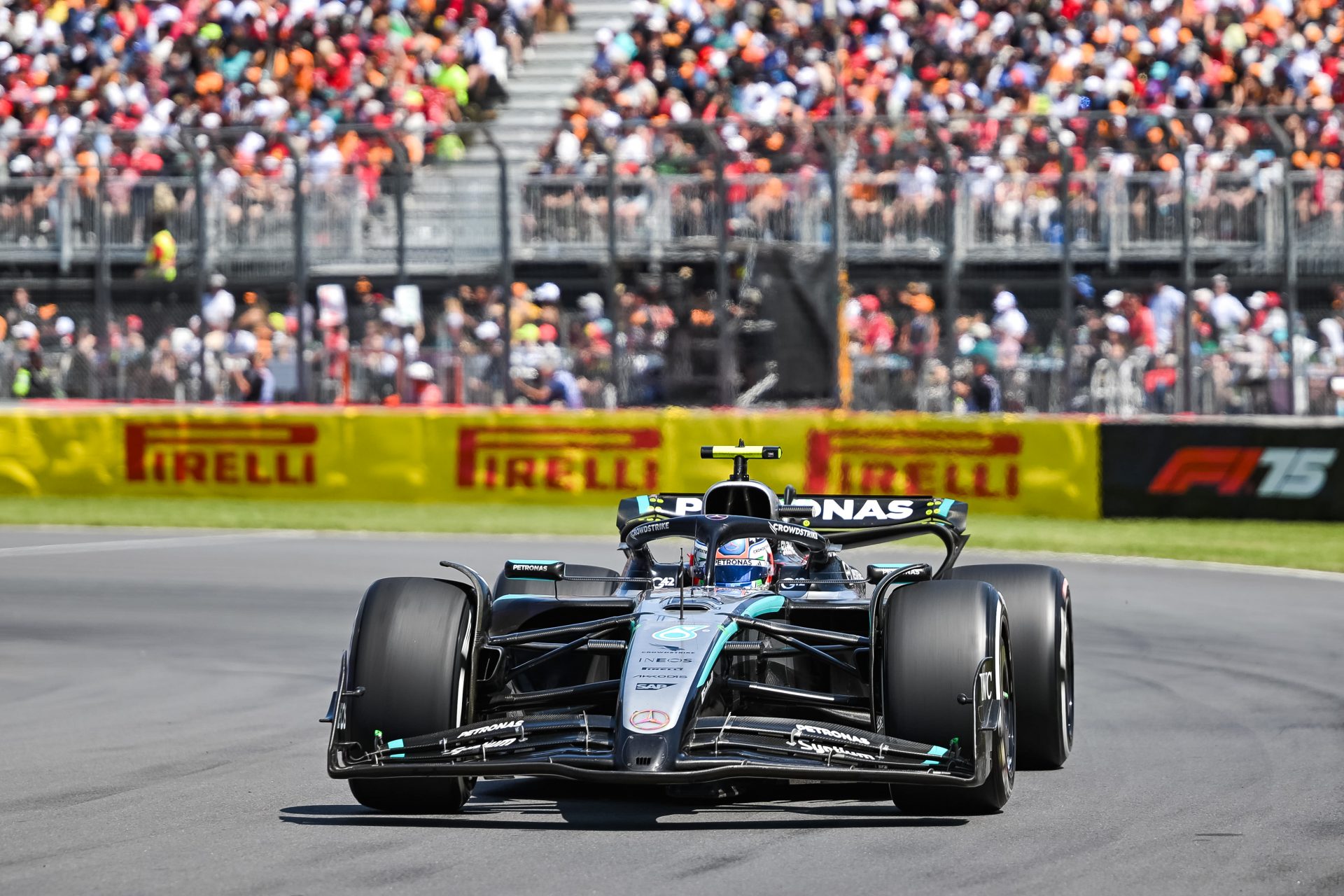
Multiple reports recently have claimed that Mercedes’ rivals are seriously looking to challenge the compression ratio loophole that the Silver Arrows have allegedly found in the 2026 F1 regulations. But is Mercedes’ 2026 power unit really in any danger this close to the start of a new season? Let’s look at what we know till now.
The rumors of Mercedes having exploited a compression ratio loophole in the newly designed 2026 regulations first started around the turn of the year. It was reported that the German team had found a way to stay within the letter of the law but gain a competitive advantage over its rivals after having built what was already rumored to be the most superior power unit of the new era.
Later, it was reported that Red Bull Racing was also made aware of this loophole via an ex-Mercedes employee who now works at the Austrian team, and that Laurent Mekies’ squad had also applied the same concept for its new engine. Other manufacturers on the grid which includes Ferrari, Audi and Honda, were reported to be furious about this loophole. So first, let’s look at what the “loophole” even is.
What Even is the Loophole That Mercedes is Supposed to Have Exploited?
The 2026 F1 regulations have bought about major changes to both the power unit and the aerodynamics, or physical body of the cars. One of the major changes included the switch to a 16:1 compression ratio in one cylinder within the new power unit, down from 18:1 in the previous regulations. Most importantly, the new laws also state that this will be measured at ambient temperatures.
Later, it had been reported that Mercedes had found a way around this rule to run its cars at a 18:1 compression ratio, while still being compliant with the rules, based on the wording of the regulations.
This was because the team used material that expands at high temperature, as the engine would be when running out on track. This would give the team a huge advantage over the rest of the field, with some estimates suggesting they could be over two-tenths of a second faster per lap.
After these rumors made their way to the media, Mercedes stated that it was completely confident that its 2026 power unit is compliant with the new regulations. But all rival engine manufacturers still went to the FIA to seek greater clarification on the matter.
So, is the 2026 Mercedes Power Unit in Danger?
Three out of F1’s five engine manufacturers had been looking to, in a way, stop Mercedes from being able to exploit this loophole in the regulations. The teams are reportedly looking to add to the regulations that the compression ratio be checked either via sensors while the car is running on track, or in the garage when it is up to racing temperature.
Simply put, this would mean the compression ratio be checked at hot temperatures rather than at ambient temperatures.
But the rivals couldn’t even think of bringing about any such changes to the regulations, until a very interesting development happened recently.
The Race reported that the three manufacturers, namely Ferrari, Audi and Honda, have now convinced Red Bull to support them on the matter. This is especially fascinating because as previously mentioned, Red Bull itself was reported to have incorporated the loophole in its 2026 power unit.
This new update, if true, would suggest the Milton Keynes-based team is not gaining as much of an advantage from the compression ratio loophole as it probably had hoped to, and is now willing to stand against Mercedes. This could pose significant problems for the Brackley-based outfit.
The regulations within what is known as the Power Unit Advisory Committee (PUAC) state that changes can be made to the F1 engine regulations if four out of the five engine manufacturers agree on it, but with an important caveat, that may yet save Mercedes.
Apart from the four teams, the FIA and the Formula One Management (FOM) must also vote with the four engine manufacturers to bring about any changes in the engine regulations.
So now, it seems as though the four rival manufacturers are looking to convince the FIA and the FOM to side with them on this matter. Past precedent also suggests that both these bodies tend to vote in a bloc and hardly ever go against the other’s vote, according to the aforementioned source.
So if the FIA and the FOM choose to side with Ferrari, Audi, Honda and RBPT, Mercedes’ 2026 power unit could well be in danger of becoming illegal, after it has already been built legally. Some reports have even suggested that the rival teams are looking to move ahead quickly with this vote so that it can take affect as early as the season-opening Australian Grand Prix, which would be catastrophic for Mercedes.
College Sports Network has you covered with the latest news, analysis, insights, and trending stories in college football, men’s college basketball, women’s college basketball, and college baseball!
