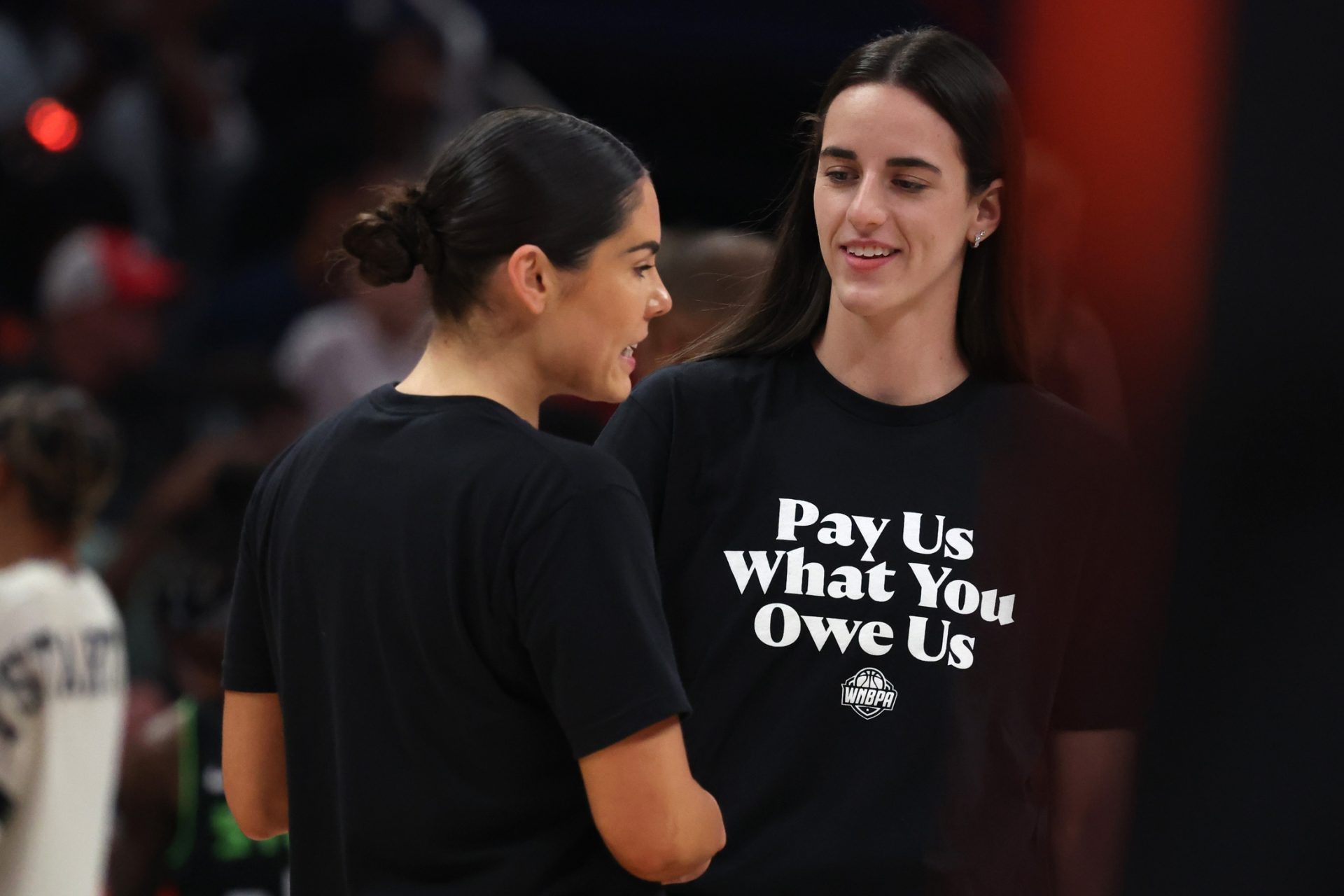
The WNBA and its players’ union have not yet come to terms on a new collective bargaining agreement, and with the Jan. 9 deadline approaching, the league has reportedly still not issued a counter to the most recent proposal from the players, which it is said to believe “would cause onerous losses.”
Latest on WNBA-WNBPA CBA Negotiations Ahead of Jan. 9 Deadline
ESPN reported last week that players are pushing for roughly 30% of gross revenue and a salary cap near $10.5 million. According to Front Office Sports reporter Annie Costabile, the union has yet to receive a response from the league.
“According to sources familiar with negotiations, the union was still awaiting a response from the league to the proposal they submitted roughly two weeks ago as of Wednesday afternoon,” Costabile wrote.
ESPN’s Alexa Philippou reported that league officials think the proposal could result in losses totaling about $700 million over the duration of the agreement.
“Such losses would jeopardize the league’s financial health, the sources said, and they would be more than the combined losses of the league and its teams in the WNBA’s first 29 years of existence,” her report read.
Per ESPN, the WNBA proposal submitted on Dec. 18 called for uncapped revenue sharing, maximum salaries increasing from $1.3 million to nearly $2 million, average salaries rising from $530,000 to more than $780,000 and first-year minimum salaries exceeding $250,000.
Under the proposal, the salary cap would begin at $5 million and rise alongside revenue growth.
For comparison, in 2025 the WNBA supermax was set at $249,244, with an average salary of $120,000, a league minimum of $66,079 and a salary cap of $1.5 million.
The collective bargaining agreement carries added weight amid the WNBA’s surge in revenue and viewership, as emerging stars Caitlin Clark, Paige Bueckers and Angel Reese, along with veterans Napheesa Collier, A’ja Wilson and others, establish themselves as household names.
If the parties cannot agree on a third extension, the league could face either an owner‑initiated lockout or a player strike. In that event, negotiations would enter a status quo period.
