
Notre Dame spent the final month of the season climbing back into the playoff conversation, stacking ten straight wins and looking every bit like a team surging at the right time. But when the bracket dropped, the Irish found themselves on the outside again, and the reasoning behind it has become harder to dispute as the details settle.
The independent schedule that once made Notre Dame flexible now worked against them, and even a 10–2 record with a dominant closing stretch couldn’t outweigh what the committee valued more, resume, context, and direct comparisons.
Aaron Torres broke the situation down in a way that explains exactly why the committee didn’t elevate Notre Dame at the finish. His argument centered on the idea that the playoff shouldn’t be decided by something vague like the eye test.
He pointed out that once you strip away perception and look strictly at resumes, Notre Dame’s case thins quickly. Their best win came against USC, a team that didn’t help them much in the rankings. Their two losses were to the strongest opponents on the schedule, and one of them was to Miami, the very team they were being evaluated against for an at-large spot.
“I was like, what is the actual resume? Same number or fewer wins than Miami, Alabama, and BYU. Same number of losses as all of them. The best wins aren’t as good as any of those teams,” Torres said. (From 5:30)
Meanwhile, Texas, BYU, Alabama, and Miami all delivered better-quality wins. Torres’ deeper look made the committee’s thinking clear. Notre Dame simply didn’t match the profiles of the teams they were competing with, no matter how impressive their recent surge looked to the eye.
Notre Dame didn’t miss the playoff because of bias or a lack of respect. They missed because, when stacked alongside the other contenders, their list of wins didn’t carry the same weight. Their momentum was real. Their improvement was obvious. But in a year where multiple teams put forward stronger resumes, improvement alone wasn’t enough to push them over the line.

Marcus Freeman Had High Hopes About Notre Dame’s Chances
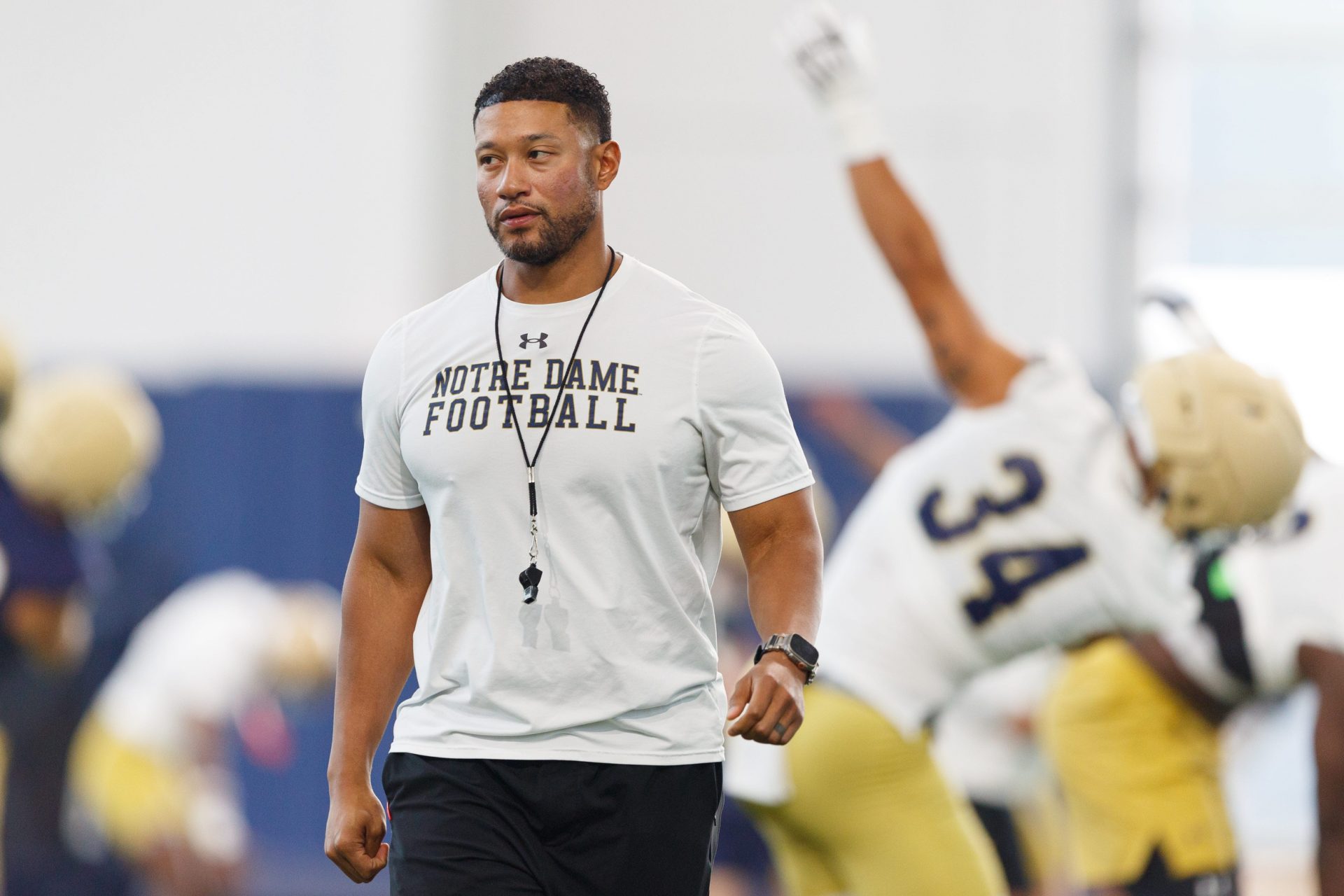
Marcus Freeman didn’t hide his confidence after the win over Stanford. He believed Notre Dame had shown enough growth to sit firmly in the playoff mix. He emphasized how much cleaner and sharper the team had become since September, and he felt the Irish were playing at a level that matched anyone in the country.
What he wanted was a committee willing to prioritize that version of Notre Dame rather than rewind back to September.
“We have improved as much as anybody in the country, been playing as well as anybody in the country and we have, in my opinion, the best player in the country,” Freeman said. “That’s what you want. You want the best teams in the country now. Who’s the best teams for the playoffs right now? I truly believe we’re one.”
The problem is that the playoff structure isn’t built to reward form alone. As we’ve seen with the committee’s decision, resume and quality of competition mean more when it all comes down to making the cut.
Read More:
Lane Kiffin Reveals Group Chat Messages With Kirby Smart, Steve Sarkisian Amid Head Coaching Rumors
College Sports Network has you covered with the latest news, analysis, insights, and trending stories in football, basketball, and more!
